

Freedom Agenda
LUZ HERNANDEZ

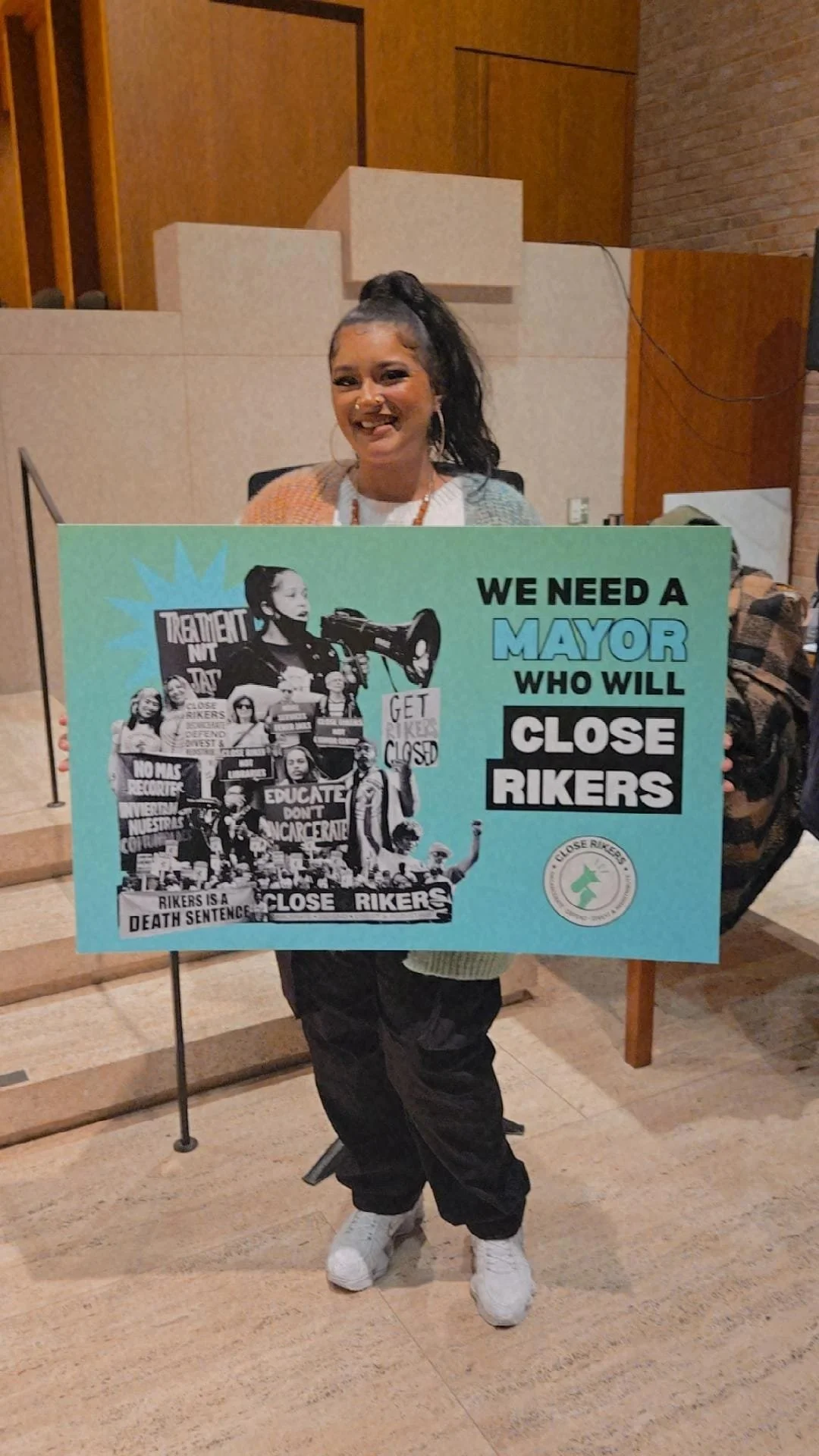
"Closing Rikers is not about being 'soft on crime.' It is about being serious about public safety. Justice should not be measured by how much we punish, but by how well we repair harm and create conditions where fewer people are pushed into the system in the first place."
Luz Hernandez, MPH, BA, is a justice-impacted multidisciplinary artist, advocate, and public health professional whose work bridges art, healing, and policy to advance systemic transformation. She is also a member of Freedom Agenda.
Q&A
1.) How are you connected to this movement?
I am directly justice-impacted and formerly incarcerated. I experienced Rikers Island firsthand and carry the physical, emotional, and systemic harm that the jail produces. I became part of the Close Rikers movement while I was incarcerated, riding the bus to Bronx court and seeing Edwin protesting outside — we cheered from behind the glass, our voices trapped inside the correction bus but our hope rising, knowing someone out there was fighting for us when we couldn’t fight for ourselves. My connection to this movement is not abstract — it is lived. I have seen how incarceration fractures families, destabilizes communities, and deepens trauma rather than addressing the root causes that bring people into the system. Since my release, my work has focused on healing, advocacy, and creating alternatives that center dignity, accountability, and restoration instead of punishment. Closing Rikers is personal to me because I know what survives there — and what doesn’t.
2.) Why should Rikers close?
Rikers should close because it is structurally incapable of being humane. No reform can fix a system built on violence, neglect, and isolation. The jail has become a warehouse for poverty, mental illness, addiction, and untreated trauma. It punishes people before they are convicted, separates parents from children, and exposes human beings to conditions that permanently damage their health and future.
Closing Rikers is not about being “soft on crime.” It is about being serious about public safety. True safety comes from housing, healthcare, education, employment, and community-based support — not cages. Every dollar spent maintaining Rikers is a dollar taken away from the infrastructure that actually prevents harm. If we want safer communities, we must invest in people before they reach crisis, not after.
3.) What is your vision for a more just and equitable post-Rikers New York City?
My vision is a city that treats incarceration as a last resort, not a default response to social failure. A post-Rikers New York would prioritize prevention over punishment. It would fund community-led alternatives to incarceration, mental health crisis response teams, restorative justice programs, and reentry support that begins before someone comes home.
I envision a city where people returning from incarceration are welcomed back with housing, employment opportunities, and trauma-informed care — not permanent stigma. A city where survivors, families, and justice-impacted people help design solutions because they understand the system from the inside. Closing Rikers should not just remove a jail; it should mark a cultural shift toward accountability, healing, and collective responsibility.
Justice should not be measured by how much we punish, but by how well we repair harm and create conditions where fewer people are pushed into the system in the first place.