

Orita Meta Resources, Inc.
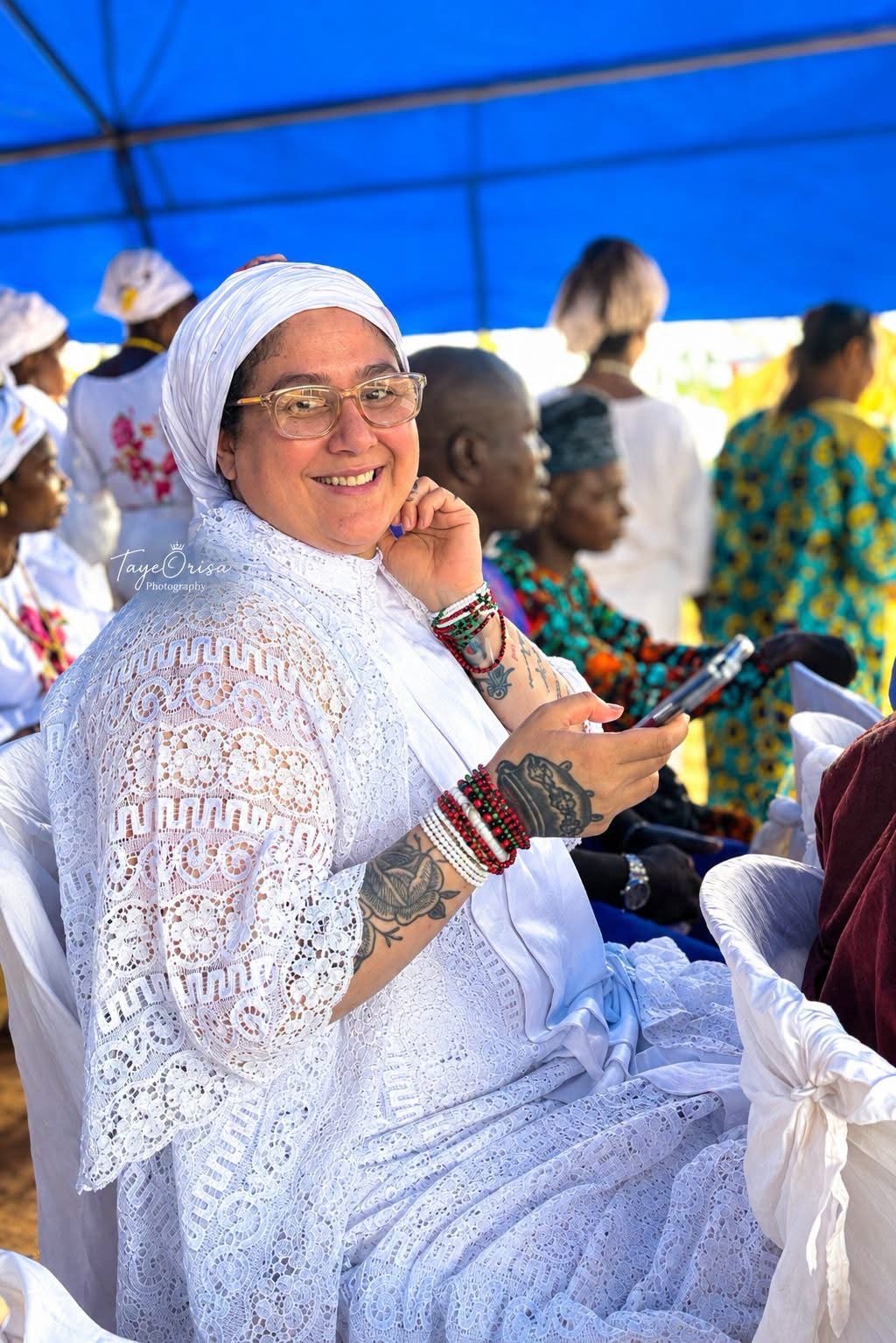
IYA ÈSÙBÍYÍ
(MS. CAMACHO)
"Closing Rikers and the borough-based jails should not simply be the end of one system. It should be the beginning of a new one—one rooted in dignity, healing, accountability, permanent housing, community, and the belief that every person deserves a genuine opportunity to come home and thrive."

Ms. Camacho is the founder of Orita Meta Reources Inc., a partner organization in the Campaign to Close Rikers.
Q&A
1.) How are you connected to this movement?
I am the Founder of Orita Meta Resources Inc. and Co-Director of the Ile Ifá Òfún Òsá Temple. I’m also known as Iya Efuntúnmiṣe Èsùbíyí, an Iya within the African Traditional Religion of Ifá Isese. A proud Boricua and Bronx native, I’m dedicated to preserving ancestral traditions while advancing healing, justice, and community empowerment.
I'm a criminologist, reentry specialist, published researcher, harm reduction advocate, restorative justice practitioner, community organizer, and street ethnographer. With over 15 years of experience, I've specialized in confidentially and anonymously engaging hard-to-reach populations, connecting individuals with critical resources and support systems that foster long-term stability and self-determination.
My professional and spiritual interests include harm reduction, restorative justice, social welfare, trauma-informed care, emotional intelligence, natural healing modalities, traditional medicine, divination, Yoruba cosmology, Taíno culture, and grassroots community organizing throughout local communities, the Caribbean, and Africa.
Drawing upon my extensive knowledge of the criminal legal system, I work to help individuals avoid system involvement, successfully navigate reentry, and rebuild their lives through access to social services, education, advocacy, and culturally grounded resources. My approach emphasizes dignity, accountability, and holistic healing while strengthening both individuals and the communities to which they belong.
At the heart of my life's work is a commitment to challenging society's perceptions of those labeled as "criminals," "gangsters," or "deviants." By creating pathways to opportunity, offering second chances, and reconnecting people with their ancestral wisdom, gifts, and inherent strengths, I empower individuals to realign with their highest potential and become active, thriving contributors to their families and communities.
2.) Why should Rikers close?
Rikers Island should close because a correctional institution should never become a place where human dignity, safety, and basic needs are routinely denied. I know this not simply from what I have heard or read, but from what I personally witnessed during the 11 months I worked at Rikers Island, specifically at the Rose M. Singer Center (RMSC).
During my time there, I witnessed women being denied basic necessities, including hygiene products, adequate medical support, medication, meaningful programming, and other essential services. I witnessed situations in which abuse occurred within jail units and correction officers failed to properly intervene or hold people accountable. I saw an environment where harmful behavior could become normalized rather than addressed.
What disturbed me most was witnessing the impact this environment had on women who were already vulnerable. In the nursery programs, where infants lived alongside their incarcerated mothers, I witnessed conditions that raised serious concerns about the well-being of both mothers and children. Infants were not consistently provided food beyond what was available through commissary, and there were inadequate opportunities for recreation and supportive care. There were also situations where mothers and their infants were separated and locked in different rooms for hours at a time. No child should experience the consequences of a parent's incarceration in this way.
I advocated repeatedly for better treatment of the women inside Rikers. I reported mistreatment and continued to speak up even when doing so placed me in difficult circumstances. Ultimately, I was prohibited from returning to the jail property. But being removed from Rikers did not end my commitment to the women I had encountered there.
After leaving, I began working to help women returning from Rikers find housing and rebuild their lives. That experience opened my eyes to another devastating reality: incarceration does not simply end when someone walks through the jail's front gate. Many women returned to their communities without stable housing, meaningful resources, employment support, mental-health support, or the assistance necessary to rebuild their lives. They were expected to succeed while simultaneously carrying the trauma and stigma of incarceration.
I watched women struggle to reintegrate into society. I watched the institutional trauma follow them home. Some women never received the support they needed. I even witnessed the devastating death of a woman approximately three months after her release. Seeing someone leave incarceration and then lose her life so soon afterward profoundly affected me. She was my student at Rikers Island and we finally reconnected, I returned to look for her and she was getting dragged out of her re-entry housing program in a black bag.
My experience at Rikers changed the way I understand incarceration. I came to believe that the system was not designed to heal people, rehabilitate people, or prepare people to successfully return to their communities. Instead, too often, it perpetuated trauma.
That is why I believe Rikers Island must close.
Rikers represents a system that has repeatedly failed to protect the people placed in its custody. Closing Rikers is not simply about shutting down a building. It is about acknowledging that a system built around punishment, neglect, isolation, and institutional trauma cannot be the answer to the complex needs of incarcerated people.
To me, Rikers Island became a modern-day plantation—a place where human beings could be confined, controlled, and stripped of dignity under the authority of an institution. Whether we call it a jail or something else, changing the name does not change the experiences of the people subjected to its conditions.
Rikers Island was never the answer, and I do not believe it can become the answer.
We need a different approach—one centered on accountability, safety, rehabilitation, healthcare, housing, mental-health services, education, family support, and successful reentry into society. People who are incarcerated are still human beings, and their humanity should never be suspended because they are behind a wall.
Closing Rikers should be the beginning of a commitment to building something better: a system that protects people without dehumanizing them, holds people accountable without destroying them, and prepares people to return home rather than leaving them traumatized and without hope.
3.) What is your vision for a more just and equitable post-Rikers New York City?
My vision for a more just and equitable post-Rikers New York City is a city that stops using incarceration as the default response to poverty, mental illness, substance use, homelessness, and other social challenges. I envision a New York City where accountability and public safety exist alongside dignity, healing, stability, and opportunity.
I would like to see Rikers Island closed, along with the borough-based jails, and replaced with a completely different model of care and accountability. Rather than building more jails, I envision transforming these spaces into Cultural and Community Centers connected to permanent supportive housing communities.
These centers would serve as places where people can stabilize, heal, receive services, reconnect with their communities, and prepare for successful reentry. Most importantly, they would not be designed around punishment. They would be designed around people, families, healing, accountability, and opportunity.
A fundamental part of this vision is that clients would have access to permanent supportive housing. Housing should not simply be a temporary placement provided while someone completes a program. Stable housing is the foundation upon which successful reentry, healing, employment, family reunification, and long-term stability are built.
Residents would have access to permanent supportive housing communities based on their individual needs. Housing would be categorized into specialized tiers, including:
● People experiencing severe mental illness
● People with co-occurring mental-health and substance-use disorders
● Elderly individuals
● Transgender individuals
● Families
● Single adults
● People experiencing substance-use disorders
● General supportive-housing populations
The purpose would be to ensure that people are not placed into a one-size-fits-all environment. Each resident would have access to housing that recognizes their circumstances, needs, identity, and goals.
The goal would not simply be to give someone a bed. The goal would be to give them a permanent home and the support necessary to build a stable life.
Permanent supportive housing would also provide continuity. A person should not have to fear losing their home simply because they have completed a particular service, reached a certain milestone, or transitioned out of a reentry program. The housing would remain a foundation while individuals continue to pursue their personal goals and become increasingly independent, when appropriate.
Every person entering the program would immediately be connected to a reentry team through the Cultural and Community Center. Reentry should not begin after someone leaves a jail. It should begin the moment someone enters the alternative program.
These centers would be unique because referrals could come directly from the court system as an Alternative to Detention (ATD) or Alternative to Incarceration (ATI) option. Instead of sending someone to jail while they wait for their case to move through the court system, eligible individuals could be connected to a structured community-based program where they can remain accountable while receiving the services necessary to address the circumstances contributing to their involvement with the criminal legal system.
Throughout their participation, residents would have access to a multidisciplinary reentry team that could include:
● Nurse practitioners and psychiatrists for medical and behavioral-health needs
● Housing specialists to help residents access, maintain, and navigate permanent supportive housing
● Case managers to coordinate services and individualized goals
● Somatic healing practitioners to help people address trauma through mind-body approaches
● Reiki and alternative healing services for individuals who choose those approaches
● Employment specialists to help residents obtain meaningful employment and develop career pathways
● Cognitive behavioral therapists to support behavioral change and emotional wellness
● Peer specialists who can provide guidance based on lived experience
● Benefits specialists to help residents obtain Medicaid, SNAP, SSI/SSDI, and other eligible benefits
● Legal teams to help residents navigate their legal circumstances and advocate for their rights
This would create something that is often missing from the current system: a coordinated team of people working together instead of forcing an individual to navigate dozens of disconnected systems alone.
The Cultural and Community Centers would recognize that successful reentry is about more than paperwork and appointments. People need connection.
These centers could provide cultural programming, educational opportunities, family services, employment programs, wellness activities, restorative practices, support groups, community events, and spaces where people can reconnect with their identities and communities.
I believe culture can be a powerful part of healing. People should have opportunities to reconnect with their families, traditions, communities, creativity, spirituality, and sense of purpose.
A post-Rikers system should not mean eliminating accountability. It should mean redefining what accountability can look like.
If someone is ordered by the court to participate in a program, there should be clear expectations and consequences for failing to comply. But accountability should not automatically mean incarceration. A person can be held responsible while simultaneously receiving treatment, permanent housing, education, employment assistance, and other resources.
Public safety and human dignity do not have to be opposites.
In fact, I believe communities become safer when people have stable housing, access to healthcare, employment opportunities, treatment, supportive relationships, and a realistic path forward.
My vision is ultimately about changing what we mean when we say "reentry."
Reentry should not mean releasing someone from a jail cell and telling them to figure everything out.
Reentry should mean returning people to their communities with a permanent home and the tools, relationships, healthcare, employment, and support necessary to succeed.
Someone should not have to choose between homelessness and returning to an unsafe environment. Someone struggling with mental illness should not have to become incarcerated before receiving treatment. Someone experiencing substance use should not have to enter a jail to access services. Someone leaving incarceration should not be released without a plan.
New York City has the resources, talent, community organizations, healthcare professionals, housing specialists, peer leaders, and advocates to build something better.
My vision for a post-Rikers New York City is a city where jails are no longer the center of our response to human suffering. Communities are. I envision Cultural and Community Centers where people are connected to permanent supportive housing, healthcare, employment, legal advocacy, healing, family, and opportunity.
I envision courts that have meaningful alternatives to detention and incarceration. I envision reentry teams that begin working with people before they ever experience the trauma of incarceration.
Most importantly, I envision a New York City that recognizes that a person's worst moment should not determine the rest of their life.
Closing Rikers and the borough-based jails should not simply be the end of one system. It should be the beginning of a new one—one rooted in dignity, healing, accountability, permanent housing, community, and the belief that every person deserves a genuine opportunity to come home and thrive.